The Annubium, Irkalla
1537 P.V. (Post Vesperum)
The Rationum, also known as The Ledger
Inscribed by The Ledger
CORAX WARNING
Extreme Horror | Extreme Fantasy | Extremely Dubious Erotica | Extremely Fucking Funny
Dear Reader,
I have a tale to tell of a monster cruelly in love, a woman who was never supposed to love him, and a world that will suffer for his affections. It is a tale of blood, lust, desire and appalling misunderstandings of romance. Our monster’s understanding of love is more disturbing than his intentions, and his execution of said love is even worse! Prepare for unapologetic gore and amusing, yet repulsive anecdotes. Welcome to Immortalis. Before we proceed with a few world-building formalities, allow me to introduce this tale through a summary, or blurb, whichever tickles your fancy.
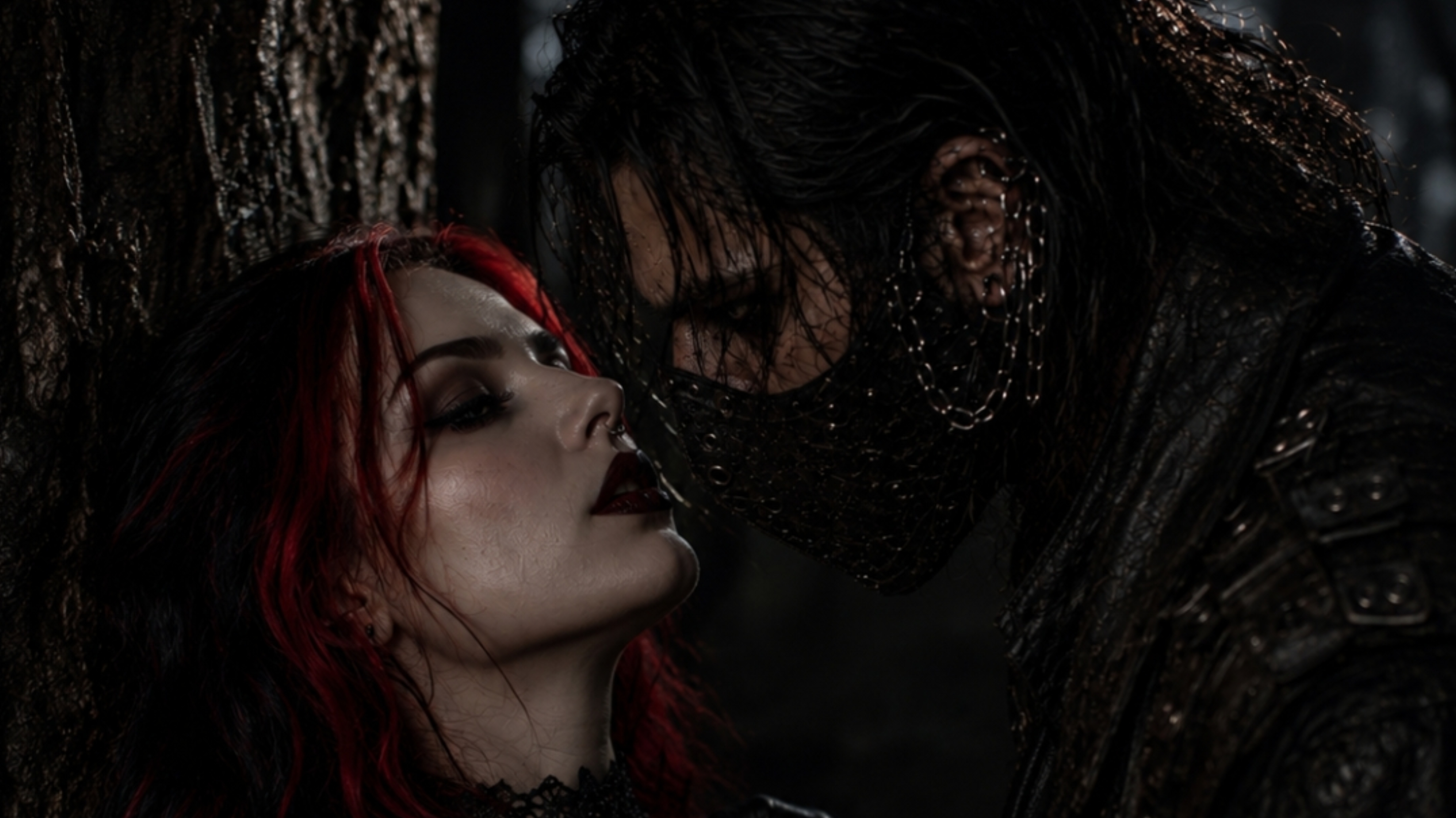
Repulsive, multi-bodied monster Nicolas DeSilva is an irredeemable scumbag who makes the terrible mistake of falling in love. His plan is simple, he intends to torture the woman he loves into marrying him, using the finest dating advice available to a horny, sadistic demon: dark romance porn. Nicolas possesses an inexhaustible appetite for cruelty, and suffering is frequently an end in itself. He delights in prolonging torment, particularly when his victims still possess enough hope to make its destruction entertaining.
For Immoless Allyra Cavidini D, matters are worse. Nicolas exists in two hundred and sixteen bodies sharing a single consciousness, each with its own personality, proclivities towards sadosexual gratification and ravenous appetites. The Nicolai feast upon mortals and immortals alike, sating their sexual needs whilst tearing flesh from bone, and every Nicolai desires a taste of the woman Nicolas intends to possess.
Like all ravenous monsters, Nicolas wants his fairytale. He wants to be loved precisely as he is, without compromise, and demands absolute ownership. His volatile temper makes resistance a hazardous undertaking that tends to end in blood. Nicolas sees no contradiction between suffering and affection, and the distinction between tenderness and calculated sadism is apparent to everyone except him. He considers the terror of losing oneself to another an entirely reasonable expression of devotion, provided the other person is him.
My tale will begin as a darkly comic interpretation of horror’s hurt/comfort trope before descending into extreme horror, grotesque erotica and a repulsive parody of romance. The comedy will not diminish the horror, Dear Reader. It will accompany it, often at the most inappropriate moments, as the truth behind Nicolas’s apparent love story emerges. Nicolas may joke while his victim bleeds, offer tenderness after inflicting torment, or congratulate himself upon a heroic deed everyone else recognises as an atrocity. His amusement is genuine, Dear Reader, and so is the suffering.
The story will take you through horror, dark romance, fantasy and black comedy, with wars, catastrophes, obscenities and an unreasonable quantity of property damage along the way, before culminating in a finale of such grotesque extremity that I promise you shall struggle to find its equal in storytelling.
Before we sink our teeth into the meat of this story, you require some background. Our world differs from yours, and a passing acquaintance with its history, inhabitants and peculiar arrangements will spare us confusion later. I shall keep matters simple, although simplicity rarely survives Nicolas DeSilva, so please try to endure as the actual story moves at a disgustingly amusing speed.
I shall be your guide. I am the Ledger of Irkalla, Hell. I am also known as the Rationum, keeper of contracts, classifications, histories and assorted administrative catastrophes. The events I am about to recount are already inscribed in my records. You may trust me, mostly, but I advise against making a scene over complicated details. We shall revisit ideas as the story progresses, and occasionally I may repeat myself as I am aware of the fundamental difficulties in grasping a concept as complicated as Nicolas.
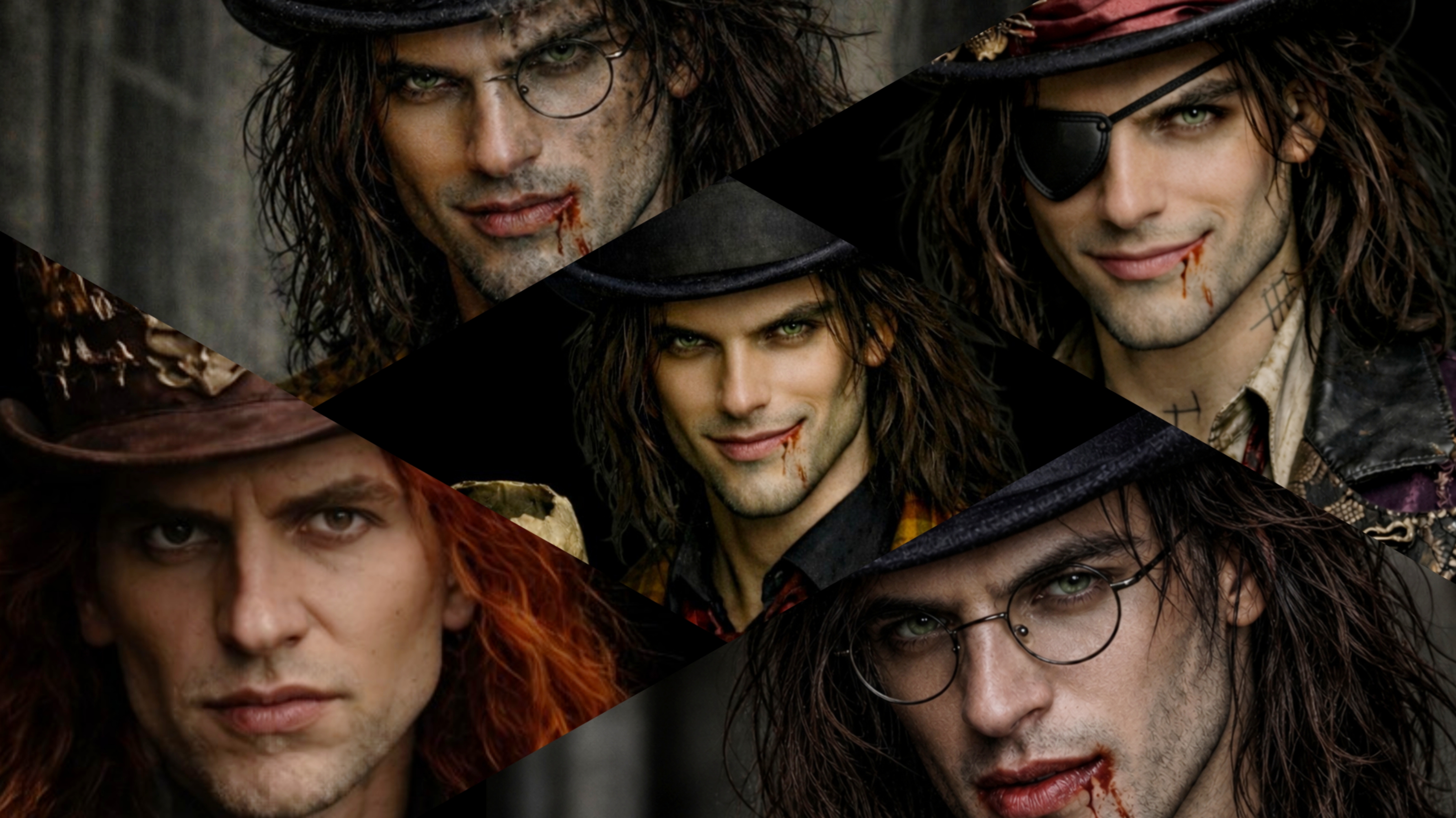
Our principal concern, the hero of our story, is Nicolas DeSilva, an Immortalis and son of Primus, Darkness himself. You will encounter faces, names and personalities so distinct that you may regard them as separate individuals. This would be convenient, but inaccurate. Two hundred and sixteen bodies do not make two hundred and sixteen men. There is only one Nicolas, and there has only ever been one Nicolas.
Nicolas wishes to be the hero of every story in which he appears. Having taken extensive measures to appear in most of them, he presents us with a narrative problem. In horror, he casts himself as both monster and hero; in dark romance, he assumes the romantic lead; and when kingdoms go to war, he develops an enthusiasm for commanding armies or sailing as a pirate. He appoints himself physician, prosecutor, detective, saviour, victim, husband and sovereign, sometimes while repairing a catastrophe he has caused just minutes earlier.
He is easily angered, prone to spectacular outbursts and convinced of his own importance. Somewhere during his existence, the cheese slid from his cracker, or rather, all two hundred and sixteen of his crackers. To understand how he came to exist, we must return to the beginning, when there was Primus, and Primus was Darkness.
Before the Deep, Irkalla, the stars, suns and moons, Darkness existed alone within the Void. Primus was the first existence, without corporeal form or means of experiencing anything beyond himself. He created Lilith for companionship, and together they inhabited the Void before Primus fashioned the skies and, beneath them, Morrigan Deep.
The Deep contained deserts, forests, mountains, oceans and innumerable species of flora and fauna, although self-conscious life had yet to emerge. The Getsug Sea lay west and the warmer Lanme Wouj Sea south, with Thanata and the Sihr Archipelago beyond the western shores. Its fertile mainland awaited inhabitants who would find innumerable reasons to quarrel over it.
When souls born of darkness and light entered the Void, Primus granted them corporeal bodies to experience his creation. Mortal thesapiens inhabited the Deep alongside immortal vampires, baer lycans, sorceresses and necromancers. Primus also fashioned bodies for himself and Lilith, allowing them to experience their world physically. Unfortunately, Primus’s consciousness and some of his weird urges were far too great for only one body, so he created two; Primus, the Vero, and his dandy Evro, Argentum. We shall discuss the Vero and the Evro shortly.
Chaos followed bodily incarnation as vampires hunted thesapiens, thesapiens organised mobs and armies against vampires, and other factions established themselves through violence, territorial ambition and mutual resentment. Primus discovered that consciousness brought an extraordinary capacity for cruelty, appetite and grievance, so he created Irkalla.
Irkalla, Hell, which existed beneath the Deep and above the Void, was divided into six circles: the Annubium, Baalatra, Mortraxis, Judicara, Cenotapheon and Vyecarth. Although a place of torture and punishment, it also served as the administrative centre of Primus’s creation, where contracts were sealed, laws enforced and the affairs of the Deep permanently recorded. That, naturally, is now my responsibility.
The kingdoms developed through barter, feudal allegiance and contracts with Irkalla, while Primus and Lilith ruled the Deep from Neferaten, the warm lands that kissed the Lanme Wouj sea. Primus loved Lilith, and eventually she conceived their first child, Theaten.
Theaten belonged to none of the existing species. Born of Darkness and Lilith, he was something new, and Primus classified him as Immortalis. I recorded this distinction within the Annubium, establishing the classification shared by the sons of Darkness at a later date.
Ordinarily, an Immortalis possesses two bodies, a Vero and an Evro, like Primus. The conception or construction of the Evro, as you shall see, varies, as does its form. However, its existence was declared a requirement by Primus, who understood the nature of the Immortalis. The Vero is the central self, the identity through which the creature principally understands itself. The Evro is a second corporeal expression of the same consciousness, created to carry the weight of the Immortalis’s ravenous libido, which encompasses far more than sexual appetite. It includes hunger, aggression, possession, instinct and desire, together with urges civilisation prefers its citizens not to indulge in before breakfast.
The Vero and Evro are not opposing moral halves. Neither is inherently good or evil because both belong to one consciousness, capable of acting through separate bodies or merging and becoming physically whole again. When Theaten’s appetites became unmanageable, Primus created the second body to carry their weight. Theaten remained the Vero, while Kane became his Evro, a corporeal self through which the same consciousness could indulge its primal appetites.
Imagine possessing two bodies, one expressing your central identity and the other your animalistic urges. Both could walk, speak, act and acquire separate reputations while remaining entirely you. Now imagine that neither persona was particularly pleasant, and you begin to understand the Immortalis. With Nicolas, matters become more troublesome.
As the Deep developed, Lilith’s desire for sovereignty grew. Primus suspected she intended to imprison him within the Void and rule his creation with Theaten beside her. Heartbroken, Primus prepared for the betrayal.
While Lilith established a cult in Neferaten’s deserts, Primus travelled through the Deep disguised as a thesapien and selected thirteen individuals to form the Brotherhood of the Darkbadb. Their purpose was to watch the Immortalis and to maintain a library cataloguing the achievements and lives of the sons of Darkness.
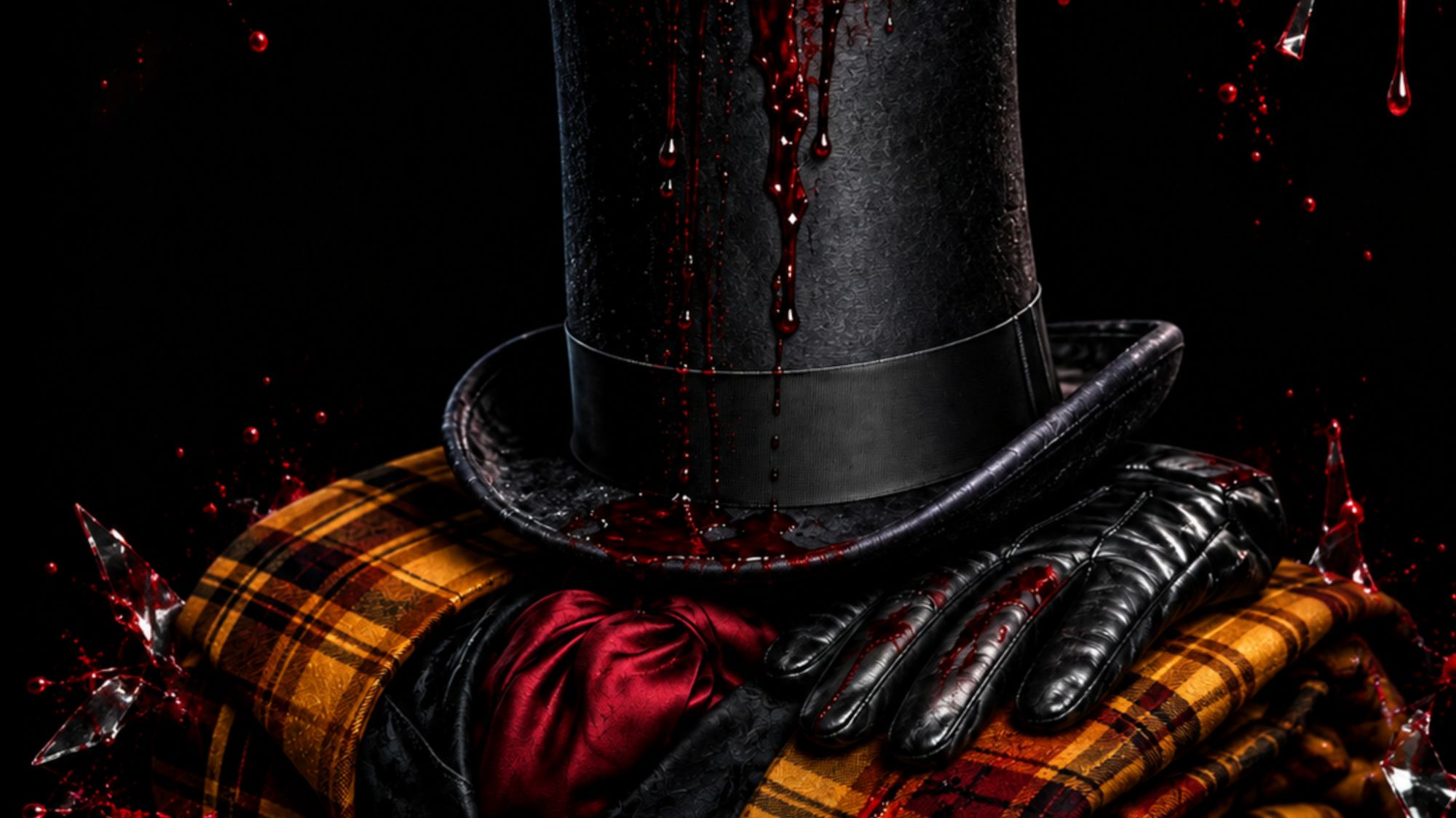
Primus also recognised the danger of depending upon one son, especially one as stupid as Theaten. Whilst travelling through the Varjoleto Forest he encountered Boaca Baer. Primus lay with Boaca, who subsequently gave birth to Nicolas. Boaca Baer was quite surprised to discover that her adorable baby boy possessed two hundred and sixteen unusual bodies, each born wearing a top hat.
Nicolas spent his first twelve years among the Baers, since his father could not be bothered with the hard part of child rearing, before Primus returned and, demonstrating the paternal sensitivity that would characterise much of our history, ripped him from his mother and took him to Irkalla for a demonic education. Boaca, who was quite happy to have two hundred and sixteen helpers did resist, but her head fell off and Primus subsequently won the debate. Some maintain this separation contributed to Nicolas becoming peculiar, although others would argue that ‘peculiar’ is doing heroic work in that sentence.
Unlike Theaten, Nicolas was, as I have mentioned once or twice, forged with two hundred and sixteen personalities, each possessing its own brain and physical body, yet all sharing one consciousness. Primus made every one of them Vero, except for Chester, who Primus made Nicolas’s Evro, his literal walking, talking, charming dick. Nicolas therefore does not possess the conventional Vero and Evro arrangement. Every Nicolai can walk, speak and act independently, yet all remain expressions of the same being. In Nicolas’s case, every last one is a sadistic bastard. The Nicolai can separate, merge and share bodies at will, functioning like the tentacles of an extremely evolved octopus. Primus regarded this exceptional ontology as a failsafe against Lilith securing absolute power through her slow son, Theaten. What Primus did not anticipate was that Nicolas would develop into a spoiled cockwomble.
Now, I do mention Nicolas’s bodies a lot here, and that is because I am very aware of the nature of humans, and their flawed perception that one body means one being. Nicolas’s plurality will be a difficult concept to grasp, but I have facilitated it by introducing all Nicolai with the prefix ‘Nicolai,’ except for one, and my reasons for doing this will become apparent much later on in the story. To put it simply, imagine someone with multiple personalities where each personality has its own body, but all share a unified consciousness, to an extent, and that being is a git. That is Nicolas in a nutshell.
Lilith continued seeking immortals to support her overthrow of Primus, unaware that his answer to her insurrection would arrive wearing two hundred and sixteen top hats. Lilith enacted the betrayal Primus had anticipated. Primus was defeated, which did not concern him as Lilith’s nagging was a bit harsh about the ears and respite in the Void felt like a holiday, but before departing, he stripped her of sovereignty, denying her the authority she had sought.
As Primus was overthrown, Nicolas, through the skullduggery of the trickster Djinn Ibliss, had a son, Behmor. Like his father before him, Behmor served his apprenticeship in Irkalla, where he trained as a lawyer before becoming King of Irkalla. To assist his governance of the Immortalis, Behmor created six mirrors within the Annubium, known collectively as the Ad Sex Speculum, through which every Vero and Evro could be observed at all times, including Behmor’s Evro, Tanis. Behmor considered constant surveillance an excellent idea, provided someone else performed it, and delegated the watching to his minions.
With Primus gone, the thesapiens attempted to establish their own balance. Thirteen men were elected as the Pauci Electi, an order opposing the sons of Darkness and the DarkBadb Brotherhood. Believing mortal numbers could overcome the Immortalis, they raised armies and began the War Before the Dusk.
The thesapiens lost, although the war lasted a fortnight and might have ended sooner but Nicolas could not decide whether to be on his own side or that of the thesapiens. Such nonsense was characteristic of his habit of engineering catastrophes for his own entertainment.
The war left the Deep ravaged. The thesapiens were despondent, and their despondency grew when the Immortalis demanded the ongoing supply of tributes, mortals sacrificed to the Immortalis for sex, food, and whatever other weird acts the Immortalis wanted to engage in. Tributiaries were built for such a purpose and everyone was mortified, except for the men who got to breed day and night. Thesapien rulers were bound by administrative frameworks, contracts, alliances and mutual hatred. The two overlapping suns were lowered, some said by Primus from the depths of the Void, permanently to the horizon, ending the day without permitting night to arrive. The Deep entered eternal dusk, beginning the era known as Post Vesperum, or P.V. as opposed to Ante Vesperum or A.V.
In 1 P.V., the Pauci Electi established the Immoless and the related Immoless seasons. Every hundred years, two girls were bred through arrangements involving Irkalla, demonic women and the Electi priesthood. They were trained, poorly, in whatever magick their parentage afforded them, and then sent to challenge the Immortalis. Across fourteen centuries of these seasons, every Immoless was slaughtered, mainly by Nicolas.
Then came Allyra Cavidini D, the anomalous third Immoless, born of Reftha, a snake demoness, and allegedly Tempus of the Electi, although there were rumours to the contrary. Allyra’s true nature and what she became and why she mattered to Nicolas are questions best left to the story. From the Electi’s perspective, she was certainly not bred to become the heroine of his grotesque romantic ambitions, although Nicolas has never respected other people’s plans or narratives.
By 1536 P.V., kingdoms had risen and cruelties had become customs, and Nicolas had acquired an alarming number of places in which to make himself unwelcome. The Deep’s inhabitants had found inventive ways to exploit one another, so allow me to acquaint you with a few of the locations where Nicolas and his family conducted their affairs.
Let us start with Irkalla, the hellish domain whose aperture sits on the cusp of the Kingdom of Tepes and Bratsioca. At the commencement of my tale, Irkalla was home to Nicolas’s long-suffering son, Behmor, and his lover Baal. Behmor, like all Immortalis, has an Evro, Tanis, a monstrous creature that dominated the icy glaciers of Bratsioca, north of the Irkallan Aperture. A frightful beast whose loud roars and horrifically sewn body parts attracted tourists. Tanis did not want to be a tourist attraction, but it gave him a reputable living.
South of Bratsioca, still within the Deep’s northern reaches, stands Castle Tepes in the Kingdom of Tepes, where Count Tepes, Roger, or Count Pompous as Nicolas called him, ruled the six villages of Tepes and the port town of Sapari with his queen, Anne. The villages known as Threnodyl, Ashurrel, Doloros, Khepriarth, Serphage and Lethecrown, each had thesapien lords.
Count Pompous was a higher vampire who took his role as leader extremely seriously, and in doing so, made a rod for his own back as every minor complaint would be referred to Tepes by the local lords for immediate resolution. Most of their complaints were about Nicolas, and Count Pompous would refer these matters to Theaten, who Nicolas called, ‘Robert.’
Theaten had an amiable relationship with Tepes and Anne, whereby Tepes received tributes and Theaten received copious portions of Anne’s ripe ass, and this brings us to the Kingdom of D’Aten.
D’Aten is a forested land of villages and holdings, dominated by Castle D’Aten, a bleak fortress rising from a rocky outcrop at its centre. There, Theaten kept his favourite tribute, Calista, imprisoned, indulged his appetites for domination, engaged in threesomes with Anne and Tepes, boned the bones of his victims, and consumed copious amounts of tongue. Some said that this was due to his mother Lilith’s rampantly wagging tongue and excessive smothering of her little pickle.
Neferaten remained under Lilith’s influence. There, her priest and priestess, Kufia and Owuo, maintained the old ways through public tribute-sacrifices with dancing, singing, and blood draining from the living beneath the low desert suns. North of Neferaten, one may find Ard Quahila, canyonlands that provided home to Nicolas’s malformed discarded creatures, and a few weird cults. Of course, Nicolas did not live in close proximity to his monstrous mutants, he was far too good for that.
Nicolas lived in Togaduine, south of the Varjoleto Forest, which lies south of D’Aten Forest. Togaduine was Nicolas’s domain, a Kingdom that sits on the cusp of the seas and borders Neferaten. His home, if one can call the mire that, was Corax Asylum. The term asylum is applied with generosity. Corax was Nicolas’s personal playground of torture, where he devised new instruments of suffering, tested their effectiveness upon the unfortunate occupants and regarded the resulting screams as useful feedback and a constant stimulus for his hard cock. Nicolas’s estate comprised of the main asylum, a cluster of cottages, a secondary house, extensive grounds and a wall of heads. His residents were made up of tributes and inmates, people Nicolas had declared insane, and whoever else took his fancy. The staff, of course, comprised of two hundred and sixteen Nicolai and a miserable aged ghoul named Demitri, although Nicolas called him Chives, mostly. There were also porters, ghouls in training.
There is one further matter before we begin. You may encounter events that appear to contradict one another, occur twice or unfold in an order that defies conventional chronology or previous iterations. I have recorded them precisely as they occurred, Dear Reader, although the order in which you discover them is another matter entirely. There is sorcery afoot, and I suggest you reserve judgement and allow events to unfold, but whatever you do, do not trust Nicolas.
Now let us enter the absurd nastiness of this gruesome tale without further ado.
Signed,
The Ledger.