
Behmor is the son of Nicolas DeSilva, the King of Irkalla, and the Vero of Tanis. Among the Immortalis, he occupies the unenviable position of being both a powerful ruler and the primary recipient of his father’s endless catastrophes. Intelligent, pragmatic, and deeply weary, Behmor spends much of his existence attempting to maintain order in a family seemingly dedicated to creating disorder.
His origins are rooted in one of Nicolas’s many attempts to manipulate circumstances for his own amusement. During his youth, Nicolas lived in a ziggurat neighbouring the Djinn Ibliss. At the time, Primus had been betrayed by Lilith, whose new lover, the sorceress Kyrie, had become a source of constant irritation. Seeking revenge, Nicolas persuaded Ibliss to make Kyrie fall in love with him. The plan worked perfectly. Kyrie became completely devoted to Nicolas, whose initial amusement gradually gave way to frustration as her affection became increasingly demanding.
Eventually, Nicolas sought to free himself from the relationship. Lilith wished Kyrie returned to her, while Nicolas had grown tired of her complaints regarding his numerous infidelities. Unbeknownst to him, however, Kyrie was already pregnant. Assisted by Lilith, who intended the children to be raised only to be slaughtered, Kyrie concealed the pregnancy and later gave birth to twins: Behmor and Aneeka.
Unlike many children born into the Deep, Behmor grew up knowing the truth of his origins. He knew that Kyrie had attempted to flee with him as an infant. He knew that Lilith intended both children to die. He knew that Nicolas tracked Kyrie to the cliffs, rescued him, and reclaimed him. He also knew that Nicolas failed to save Aneeka.
That failure shaped the rest of Behmor’s life.
Aneeka was Behmor’s twin sister and original Evro. While Behmor was raised within Irkalla, Aneeka was raised separately by Owuo and Kufia, who nevertheless allowed Nicolas to visit her. For a time, Nicolas maintained a relationship with both children. When Aneeka reached the age of sixteen, Lilith enacted one of her many schemes. Her execution was staged before Nicolas, who was unable to intervene. Enchantments placed upon the twins by Kyrie during pregnancy prevented him from saving Aneeka as he had once saved Behmor.
The loss haunted both father and son.
After Aneeka’s death, neither Nicolas nor Webster could locate her within Irkalla. Convinced she had somehow passed beyond their reach, they eventually created a replacement Evro for Behmor. Using preserved remains gathered from fallen soldiers, including members of Harlon’s platoon stored within Nicolas’s vast ice vaults, they constructed Tanis. Though Tanis fulfilled the role, Aneeka’s absence was never truly replaced.
Behmor’s experiences left him with a complicated view of family. He does not regard Kyrie as a mother. In his eyes, any woman willing to allow her children to be raised for slaughter forfeited that title. Whatever affection he might have felt was extinguished long before adulthood. If anything, Behmor’s understanding of parenthood was shaped far more by Nicolas than Kyrie, despite his father’s many failings.
Like Nicolas before him, Behmor was trained extensively in the governance of Irkalla. He became a master of constitutional law, tort law, administration, contractual systems, and statecraft. While many members of his family pursue power for its own sake, Behmor developed a genuine respect for governance. He understands that kingdoms survive through systems rather than personalities and that even Hell requires competent administration.
As King of Irkalla, Behmor spends much of his life attempting to keep those systems functioning. Political disputes, infernal contracts, legal appeals, bureaucratic crises, and administrative failures all pass across his desk. Unfortunately, so does Nicolas.
Much of Behmor’s reputation stems from his role as the unwilling audience for his father’s endless grievances. Nicolas routinely arrives to complain about Allyra, family disputes, political conspiracies, romantic frustrations, or some newly invented catastrophe. Behmor repeatedly reminds him that he is neither an on-demand lawyer nor a relationship counsellor. Nicolas ignores this distinction completely.
Throughout Allyra’s story, Behmor serves as one of the few people willing to tell uncomfortable truths. He repeatedly warns Allyra about Nicolas’s behaviour and repeatedly warns Nicolas about himself. He recognises the manipulation, possessiveness, jealousy, and obsession for what they are. He points out the political consequences of pursuing an Immoless. He advises restraint. He recommends honesty. He suggests alternatives. Nicolas listens politely before disregarding every word.
Yet Behmor’s attitude towards Allyra gradually changes.
Initially, she is simply another victim likely to be consumed by Nicolas’s latest fixation. Over time, however, Behmor begins to view her as family. The shift is subtle at first. He grows protective of her, concerned for her welfare, and increasingly frustrated by the situations in which Nicolas places her. Eventually he begins to accept the possibility of Allyra becoming his stepmother.
This process accelerates dramatically following the birth of Absolem.
For perhaps the first time in centuries, the fractured DeSilva family begins to coalesce around a single person. Allyra forms connections across divisions that had existed for generations. Behmor watches as she becomes a stabilising presence amongst individuals who are otherwise incapable of functioning together for extended periods. Even as he continues to criticise Nicolas’s methods, he begins to understand why so many people become attached to her.
The uncomfortable truth is that Behmor gradually reaches a conclusion he once would have rejected. If Allyra leaves, much of what holds the family together leaves with her.
This does not mean he suddenly approves of Nicolas’s behaviour. Far from it. Behmor remains fully aware of the damage his father causes. What changes is his perspective. He no longer sees Allyra merely as someone Nicolas wants. He sees her as someone the family needs.
His relationship with Baal often highlights this contrast. Baal frequently laments that Behmor does not treat him with the same obsessive devotion Nicolas directs towards Allyra. Behmor responds with disbelief. From his perspective, Nicolas and Allyra’s relationship is not a model to emulate but a cautionary tale. He repeatedly explains that manipulation, coercion, jealousy, and control are not signs of love. Baal remains unconvinced.
Despite his outward cynicism, Behmor remains one of the more compassionate members of the Immortalis family. He offers guidance when it is needed, shoulders responsibilities others would avoid, and repeatedly attempts to protect those around him from dangers they do not fully understand. Beneath the sarcasm, exhaustion, and heavy drinking lies a ruler who genuinely cares for the people under his protection.
For all the ways he differs from Nicolas, Behmor remains undeniably his son. He inherited his father’s intelligence, determination, stubbornness, and capacity for long-term planning. He understands Nicolas better than almost anyone alive, which is precisely why he finds him so exhausting. Yet when faced with the prospect of losing Allyra, Behmor ultimately arrives at the same conclusion as the rest of the family.
Whatever must be done, Allyra must be kept.
Whether that belief represents loyalty, love, dependency, or simple fear of what might happen without her remains a question even Behmor struggles to answer.
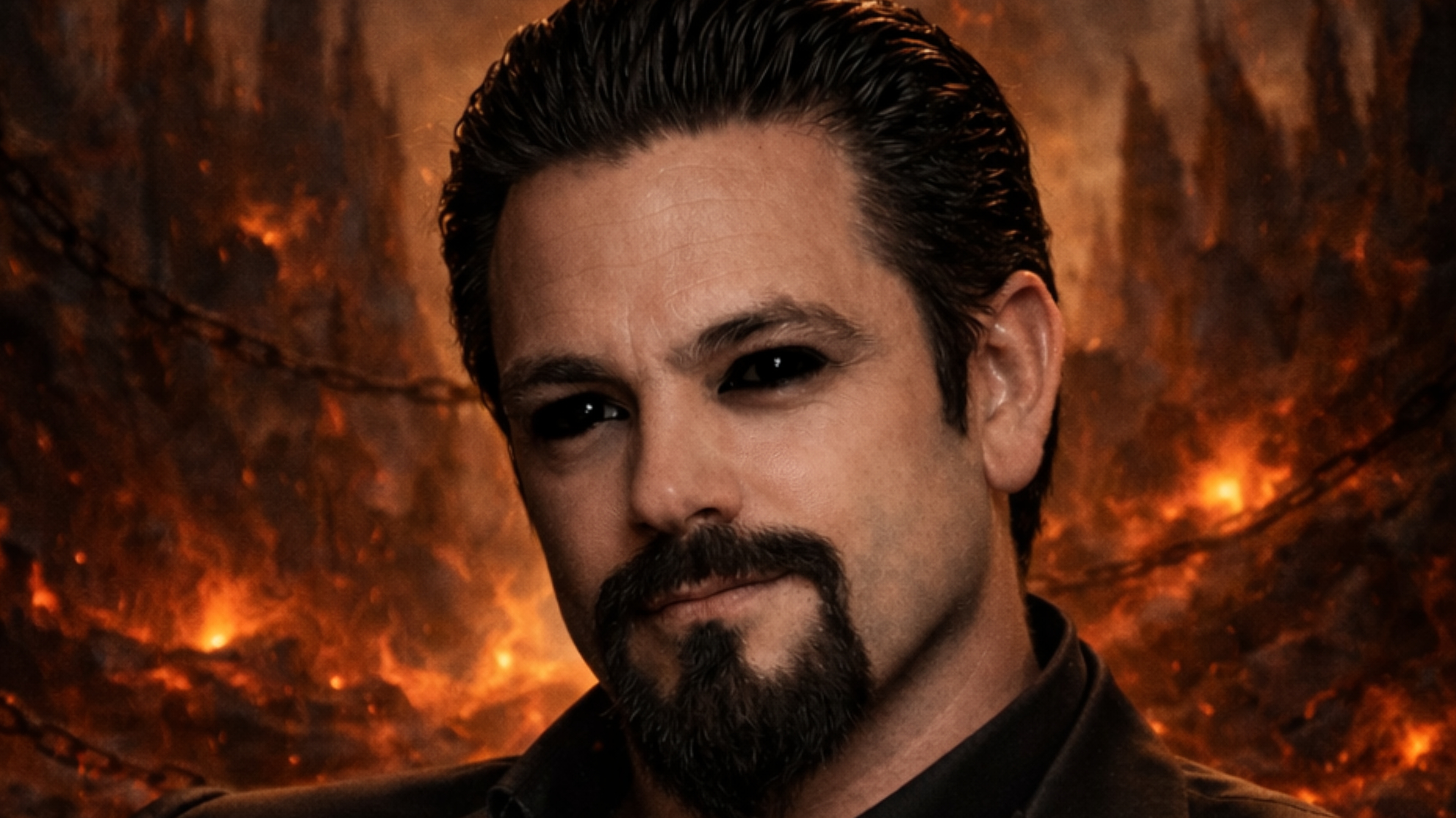
Behmor
Behmor is the son of Nicolas DeSilva, the King of Irkalla, and the Vero of Tanis. Among the Immortalis, he occupies the unenviable position of being both a powerful ruler and the primary recipient of his father’s endless catastrophes. Intelligent, pragmatic, and deeply weary, Behmor spends much of his existence attempting to maintain order in…
5–7 minutes




Leave a Reply